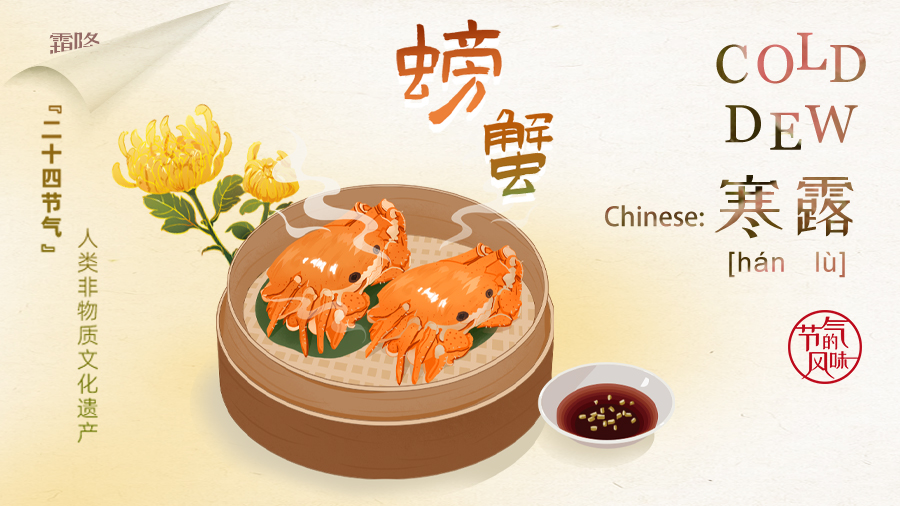
Cold Dew
Overview
Cold Dew, is the 17th solar term in the Chinese solar calendar. This period marks a significant point in the transition from autumn to winter. The solar term signifies the arrival of colder weather, with dew on the ground becoming more frequent and colder, often leading to the first frosts in some regions of China.
Climate and Weather Patterns
During Cold Dew, temperatures significantly drop compared to previous solar terms such as the Autumn Equinox and White Dew. This period is characterized by reduced rainfall, colder dew, and the approach of frost, especially in northern China. In southern China, the scent of osmanthus flowers fills the air, and the Chinese yam, known for its health benefits, is ready for harvest. These natural markers are not only significant for agricultural purposes but also serve as cultural symbols that inspire various art forms and culinary traditions.
As temperatures decrease, the weather becomes markedly cooler, often bringing the first frost to northern China. The atmosphere is generally dry, with less humidity compared to earlier in the autumn. The significant temperature differences between day and night can lead to foggy conditions, especially in areas where the cold air meets residual autumn rain.
Cold Dew is an essential time for harvesting autumn crops. The ripening of grains such as rice and other autumn produce like hawthorns and pomegranates is a focal point for farmers. This period also sees traditional activities like fishing in shallow waters, where fish tend to gather due to the warmer water temperatures in shallower areas compared to the cooling depths.
Cultural Significance and Traditions
Cold Dew is associated with various cultural practices and customs that have been passed down through generations. These traditions reflect the harmony between human activities and nature's cycles.
During Cold Dew, certain foods are traditionally consumed to adapt to the changing climate. Hawthorns, known for their medicinal and health benefits, are harvested during this period. Additionally, pomegranates are enjoyed for their beauty and health benefits.
Cold Dew is also a time for engaging in outdoor activities such as hiking, particularly in northern China, where the landscape is adorned with autumn foliage and early frost. The Double Ninth Festival, celebrated during this solar term, traditionally involves climbing hills as a means of warding off evil spirits.
Health Practices
With the drop in temperature and the dry air, Cold Dew is a period when respiratory issues such as colds are more likely to occur. Traditional Chinese medicine recommends consuming foods that nourish the lungs and enhance immunity, such as Chinese yams and dishes prepared with hawthorn and osmanthus. Article reference1. Cold Dew will condense into frost as autumn deepens. chinadaily.com.cn. 20242. 24 Solar Terms: Cold Dew. chinadaily.com.cn. 20223. Battle Cold Dew season with Chinese pastry. chinadaily.com.cn. 2018Photo Gallery(4 pictures)CategoriesLifestyleTag24 Solar TermsRelated24 Solar TermsCatalogue1. Overview2. Climate and Weather Patterns3. Cultural Significance and Traditions4. Health Practices- - - []








